refine is jPipe’s other composition operator (the first is assemble).
Where assemble joins finished arguments side by side, refine drills down: it takes a single
node you had been treating as a black box and replaces it with a whole sub-argument. It is how an
argument grows incrementally, one node at a time deepening from “trust me” into “here is why”.
This tutorial assumes jPipe 101 and sub-conclusions.
A first draft
Here is an early version of the release argument. The documentation side is already argued in full, but testing is still just asserted: a lone piece of evidence, “The test suite passes”, stands in for the whole idea that the code is tested.
justification draft {
  conclusion ready is "Version 2.0 is ready to ship"
  strategy gates is "All release gates pass"
  gates supports ready

  evidence tests is "The test suite passes"
  tests supports gates

  sub-conclusion documented is "The documentation is updated"
  strategy docs is "The changelog and API docs are current"
  docs supports documented
  evidence changelog is "The changelog is up to date"
  changelog supports docs
  documented supports gates
}
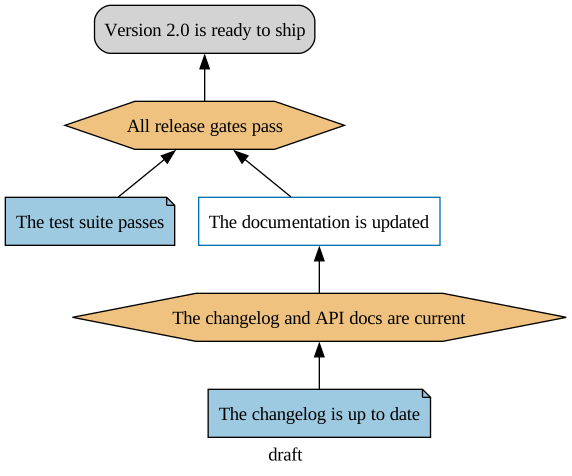
A reviewer could fairly push back on that tests node: a passing suite is some reason to believe
the code is tested, but the draft never says how thoroughly. That claim deserves its own argument.
Refining a node
Write that argument as a separate justification. Its conclusion is the claim we want to make in full, “The code is tested”, and beneath it sits the real reasoning:
justification tested {
  conclusion tested is "The code is tested"
  strategy testing is "The test suite passes with high coverage"
  testing supports tested
  evidence suite is "The test suite passes"
  suite supports testing
  evidence coverage is "Coverage is above 80%"
  coverage supports testing
}
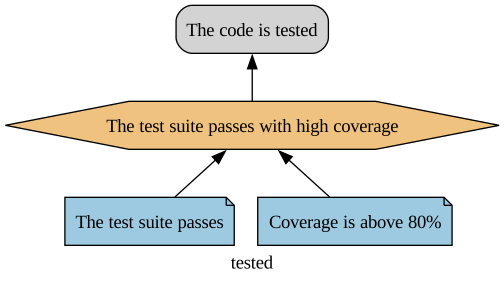
refine grafts it onto the draft. It takes two arguments, the base to deepen (draft) and the
detail to graft in (tested), plus a hook:
justification readiness is refine(draft, tested) {
  hook: "tests"
}
The hook is an element id from the first argument, the base. Here "tests" is the id of the
evidence tests declared in draft; that is the node refine will replace with the tested
argument. Pick the wrong id, or one that lives in the detail instead of the base, and there is nothing
to graft onto.
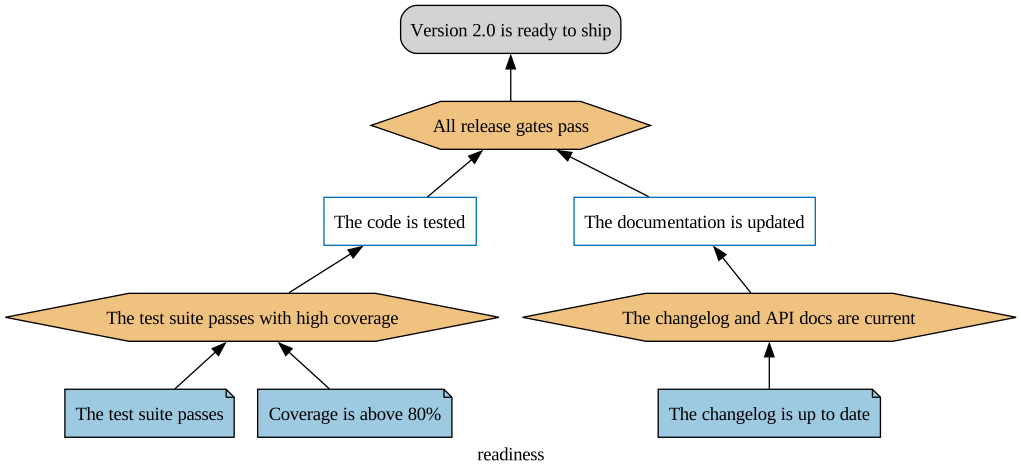
The black-box tests evidence is gone; in its place, the whole tested argument now hangs under the
release strategy. The passing suite has not disappeared, it has moved down to become one of the two
facts that support the richer claim:
Deepening without disruption
The point of refine is that you did not touch the rest of the argument to grow this one branch. The
conclusion, the release strategy, and the whole documentation side are exactly as they were; only the
node under scrutiny got deeper. That lets an assurance case mature the way real review works, one
questioned claim at a time, turning black boxes into arguments as the questions arrive, without ever
rewriting what already holds.
Where to next?
Its sibling operator, assemble, grows an argument in breadth instead of
depth, joining independent justifications side by side. When a branch recurs across arguments,
templates capture its shape for reuse. And once the argument says what
you mean, make it executable so every piece of evidence is backed by a real
check.
For larger compositions in practice, see the empowrd example.