The sub-conclusions and templates tutorials
built the readiness argument top-down: start from the conclusion “Version 2.0 is ready to ship”
and break it into the claims beneath it (a template even fixes that shape as a contract up front).
assemble works the other way, bottom-up: argue each claim on its own, as an independent
justification, then compose those finished pieces into the larger argument.
This tutorial assumes jPipe 101 and sub-conclusions.
The building blocks
Take the two claims that readiness rested on, and this time argue each as a standalone
justification, complete with its own conclusion:
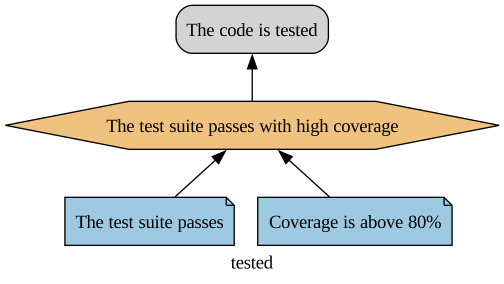
justification tested {
  conclusion tested is "The code is tested"
  strategy testing is "The test suite passes with high coverage"
  testing supports tested
  evidence suite is "The test suite passes"
  suite supports testing
  evidence coverage is "Coverage is above 80%"
  coverage supports testing
}

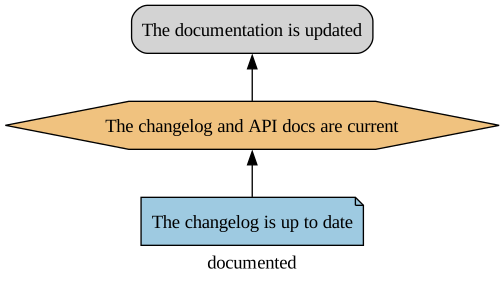
justification documented {
  conclusion documented is "The documentation is updated"
  strategy docs is "The changelog and API docs are current"
  docs supports documented
  evidence changelog is "The changelog is up to date"
  changelog supports docs
}
Each brick stands on its own two feet, provable and reviewable in isolation:
Calling assemble
A justification can be defined by calling an operator in place of a body, written
is <operator>(<sources>) { … }. assemble takes the bricks’ conclusions and gathers them under one
new conclusion and strategy; you give it a label for each:
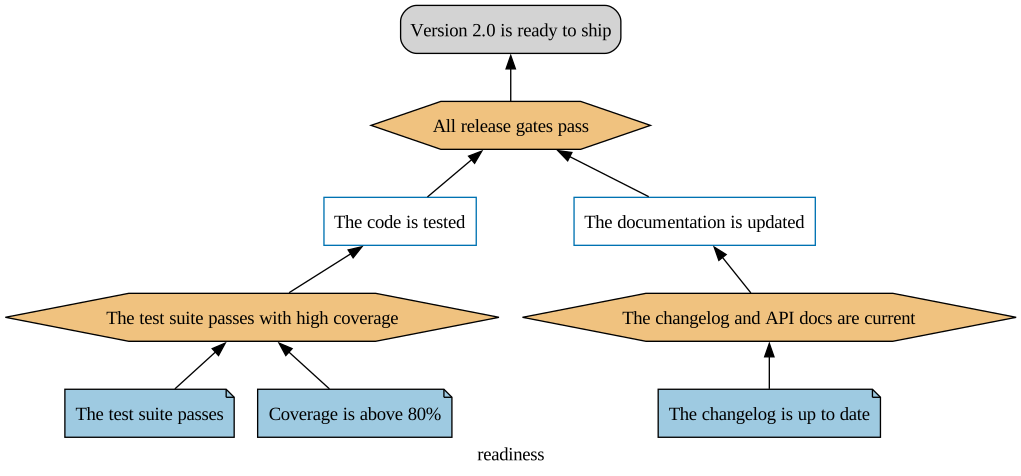
justification readiness is assemble(tested, documented) {
  conclusionLabel: "Version 2.0 is ready to ship"
  strategyLabel: "All release gates pass"
}
As your models grow, tested and documented would each move to their own file and be pulled in
with load; here they share one file, so assemble can name them
directly.
The result is the very same readiness argument you wrote top-down,
reached from the bottom up. Notice how each brick’s conclusion has become a sub-conclusion of the
whole: “The code is tested” and “The documentation is updated” now sit beneath the new strategy
instead of topping their own trees.
Two directions, one argument
Top-down and bottom-up are not rival techniques; they are two routes to the same tree, and which one
fits depends on how the work is divided. When a single author decomposes a claim, sub-conclusions keep
the whole thing in one place. When separate people or teams own separate concerns, assemble lets
each prove its own brick in isolation and then hands you the combined argument for free: no brick
rewritten, none of them aware of the others. As an assurance case grows, that independence is what
keeps it reviewable.
Where to next?
The other operator, refine, composes in the opposite direction, expanding
a single node into a deeper argument rather than joining arguments side by side. When several bricks
share a shape, templates let you fix that shape once and reuse it. And
once the argument reads the way you want, make it executable so every piece
of evidence is backed by a real check.
For larger compositions in practice, see the empowrd example.